

Product attribution · Built into Profitmind
Every attribute, on every product, at every competitor.
Read from the product image and the product description, then described the same way across your range and the whole market. It powers whitespace analysis, sharper internal analytics and your PIM.
How it reads a product
Attributes from the image and the words, tagged by where they came from.

Product
Wool coat
Notch lapel
Single-breasted
Wool-blend melton
Knee length
From the technical description: "Knee-length coat in wool-blend melton with a notch lapel. Single-breasted, three-button front."
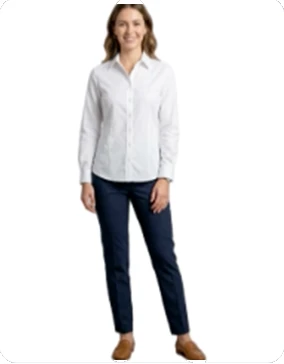
Product
Oxford shirt
Point collar
Button front
Cotton oxford
Slim fit
From the product description: "Slim-fit shirt in crisp cotton oxford with a point collar and a curved hem. Long sleeves, button front."
Illustrative products. Attributes read from the image and the description, with no manual tagging.
What it powers
One set of attributes. Three jobs done.
Whitespace by price and attribute
See exactly what competitors carry that you don't, and at what price.
Assortment Agent →
Sharper internal analytics
Sales, margin and sell-through by attribute, not just category.
See it in your data →
A fully populated PIM
Attributes written back, with zero manual tagging.
Talk to us about your PIM →
Whitespace by price and attribute
See the gap before a competitor fills it.
When every product in the market is described the same way, the gaps become visible. Read across attribute and price point and you'll see where competitors have depth and you have none. Each gap is sized, so the team works on the ones worth money.
Outerwear
Under $100
$100–$250
$250+
Wool blend
14 / 9
11 / 6
6 / 0
Puffer
18 / 12
9 / 0
3 / 2
Trench
7 / 5
8 / 7
4 / 3
Parka
5 / 0
10 / 8
5 / 4
Illustrative. Each cell shows competitor options / your options. Highlighted cells are gaps: competitors carry it, you don't.
One schema, every retailer
Your range and every competitor's, described the same way.
Retailers name the same thing differently. One retailer's "column dress" is another's "tank dress", and "slim" at one brand is "tailored" at the next. Profitmind brings those descriptions into one consistent set of attributes, so you can compare products and categories on a common market view.
One schema, every retailer
Your range and every competitor's, in the same terms.
Checked against the market
Your attributes are validated against how the industry describes the same product.
Consistent season to season
Your historical assortment data finally lines up, so last year's range can be compared with this year's.
Master data, enriched
A fully populated PIM, without a tagging team.
Every image and description, every SKU, every season. Attributes flow back into your product information system, so merchandising, eCommerce and planning all work from the same, complete product record.
Built on matching
Matching finds the product. Attribution describes it.
Awase finds the same or closest comparable product at every competitor. Attribution reads what each one is made of, how it's cut and how it's built, in one consistent language. Together they show what the market carries, at what price, and where you're missing.
200M+
products learned from, across every retail segment
Entire companies are built on product attribution. For Profitmind, it's one component.
FAQ
Product attribution, answered.
What is product attribution?
Product attribution describes every product by its attributes, such as collar, closure, fabric, length and fit. Profitmind reads those attributes from the product image and the product description, for your range and every competitor's, and describes them all in one consistent schema.
Does Profitmind product attribution need manual tagging?
No. Attributes are read from the product image and description automatically, with no manual tagging, and can be written back to your product information management (PIM) system.
What is whitespace analysis by price and attribute?
Whitespace analysis shows what competitors carry that you don't, and at what price. Because every product in the market is described the same way, Profitmind can read across attribute and price point to find gaps, and size each one so the team works on the gaps worth money.
How is product attribution different from product matching?
Product matching (Profitmind Awase) finds the same or closest comparable product at every competitor. Product attribution describes what each product is made of, how it is cut and how it is built, in one consistent language. Together they show what the market carries, at what price, and where you are missing.
What does product attribution power?
Three things: whitespace analysis by price and attribute; sharper internal analytics, with sales, margin and sell-through by attribute rather than just category; and a fully populated PIM.

See your range described like the market sees it.
Bring a category. We'll show you its attributes, your competitors' range in the same terms, and the gaps worth filling.