

Profitmind agent
Marketing Agent
Is the product the problem, or the page? Every product page audited for search, AI answer engines and conversion. Every fix valued.
Why it matters
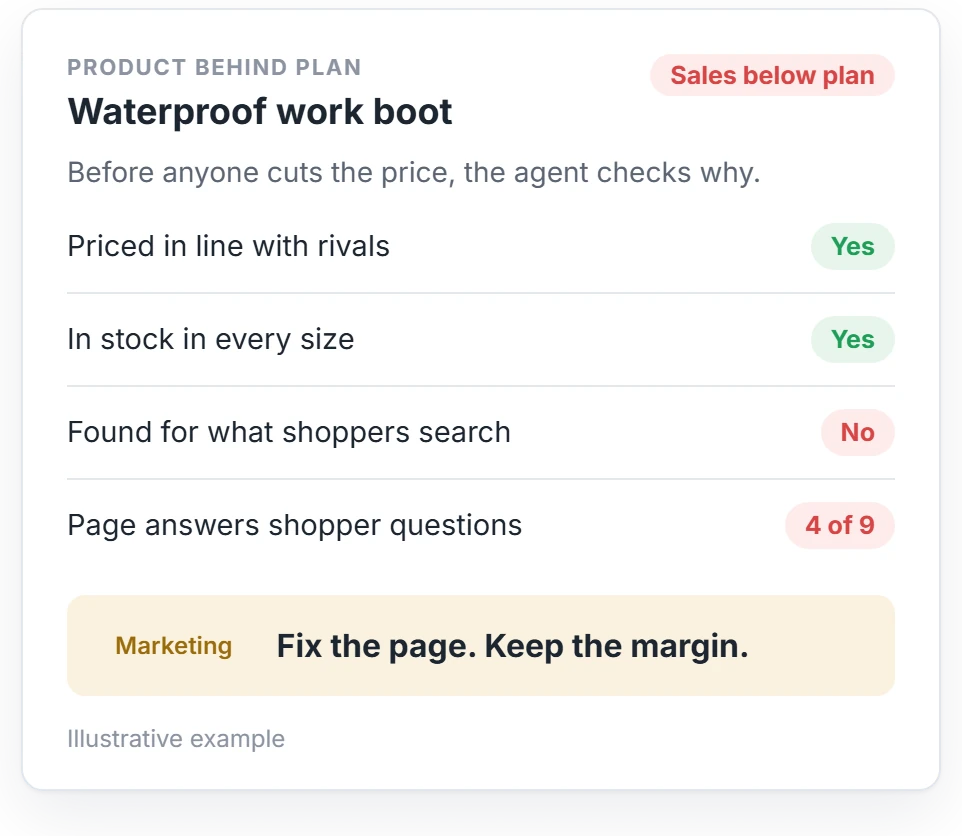
A markdown is the most expensive way to fix a page.
When a product falls behind, the usual answer is a price cut. Often the product is fine and the page is the problem. A markdown gives margin away and leaves the real problem in place.
01
Not found
It doesn't show up in search, or in AI answers, for the words shoppers actually use.
02
Found, not bought
Shoppers land on the page and leave: missing specs, unclear fit, questions left unanswered.
03
Not recommended
AI assistants can't find the answers on the page, so they point shoppers somewhere else.
How it works
Fix the page before you cut the price.
Find out why a product is behind.
When a product is behind, the agent finds out why: it isn't getting found, it's found but not converting, it's priced above rivals, or it's out of stock. Each cause goes to the right fix, and to the agent that owns it.
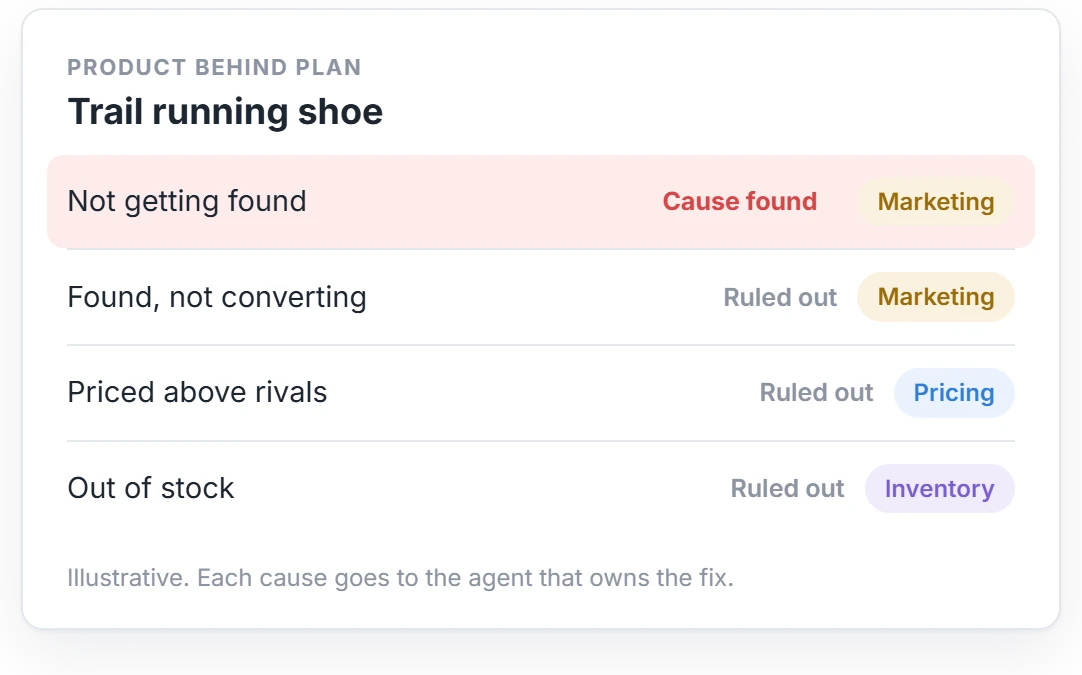
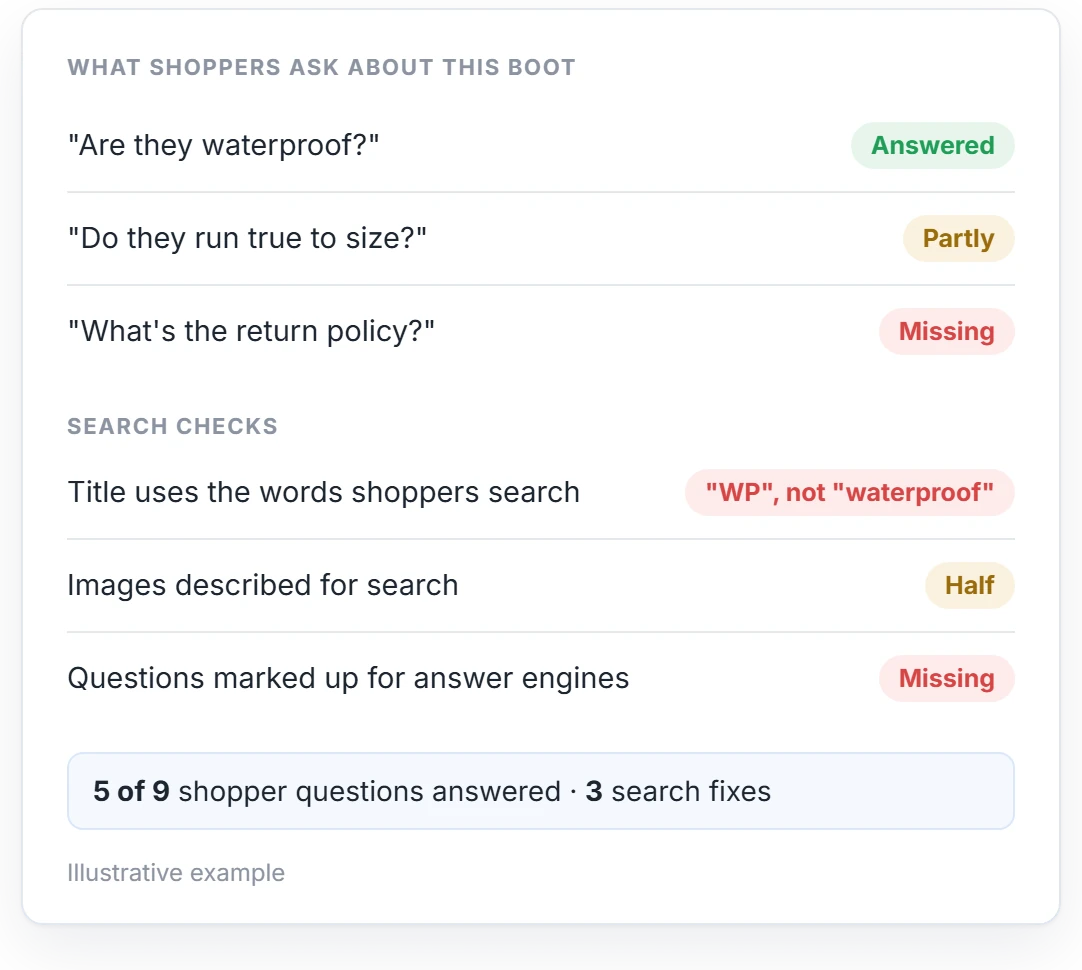
Found by search and AI answer engines.
Shoppers now ask AI assistants as well as search engines. The agent checks every product page against search and against the questions shoppers ask, and shows exactly what's missing.
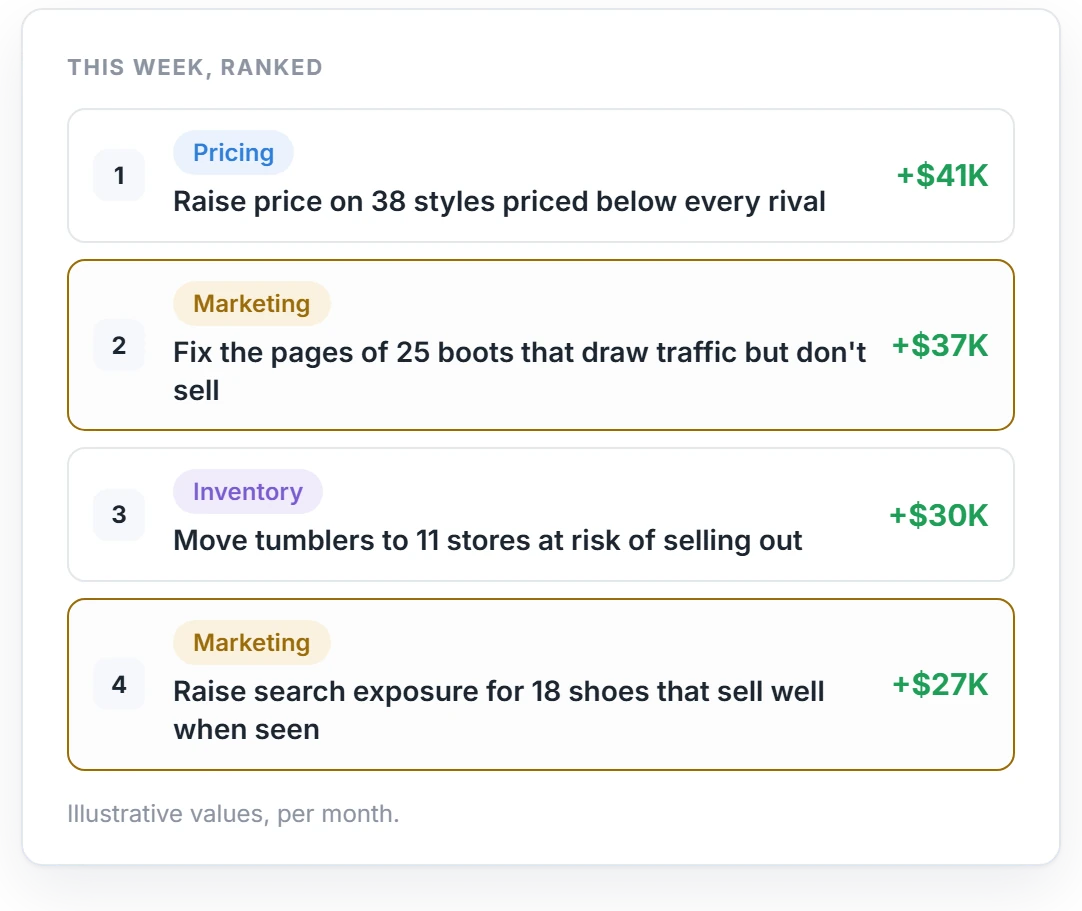
One ranked list with every other lever.
Page fixes aren't a separate report. They're valued in dollars and ranked alongside pricing, promotion, inventory and competitive moves, and checked against your strategy. The fix worth the most gets done first.
An example
One product, before and after.
The plan was a markdown. The agent found the page was the problem, so the fix kept the full price.
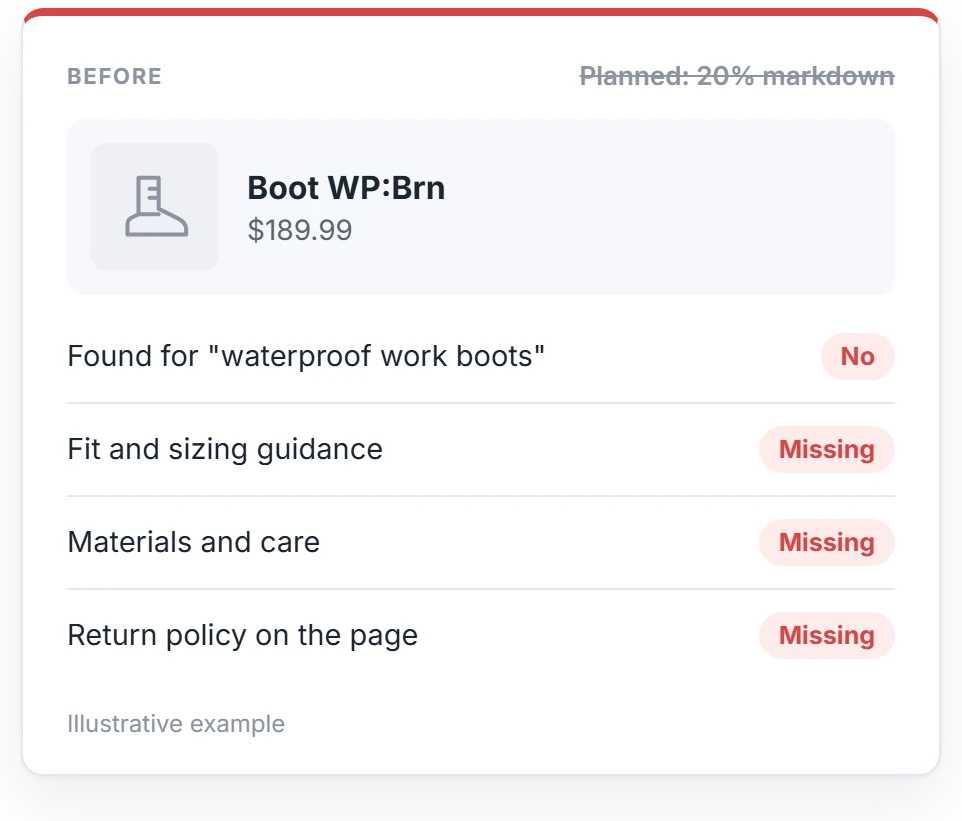
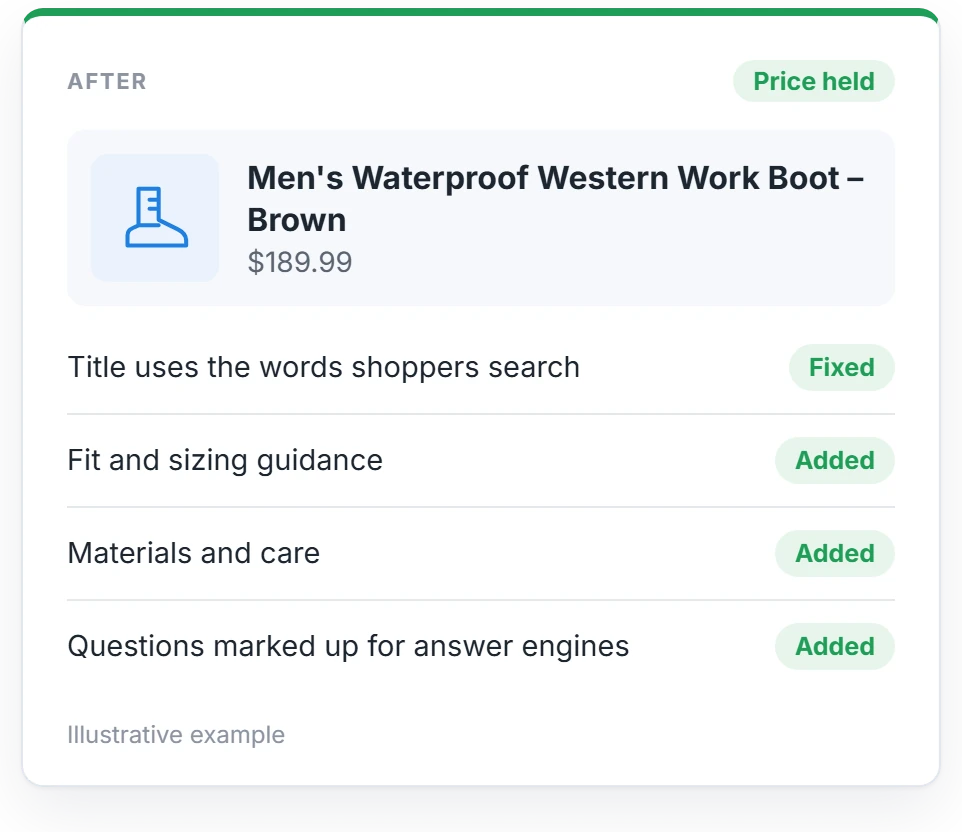
Illustrative example. The agent recommends each action and values it; your team approves it.
Profitmind FAQs
Take a look through some of our more common questions. Still have a query? Get in touch.