

Batteries Plus Case Study
$4M increases in revenue and profit in the first nine months of use.
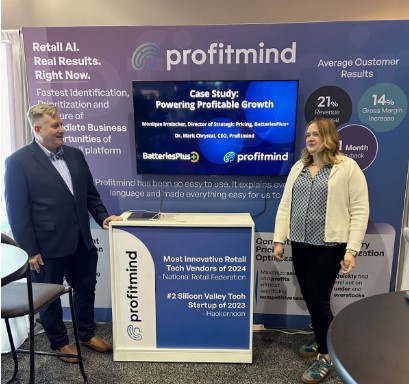
Case Study: Batteries Plus+ Powering Profitable Growth
Batteries Plus+ is a consumer products retail chain providing battery, lighting, smart home, key fob, and phone repair solutions.
The Challenge: Auto batteries drive store traffic and brand awareness for Batteries Plus+. As a smaller player in the category, they assumed they needed to maintain a lower price point to compete. The long-tenured team had deep product expertise but limited customer perspective and analytical skills. The available pricing tools provided inadequate market pricing analysis and required labor-intensive, manual competitive product and price matching.
Action Taken: Batteries Plus+ quickly implemented Profitmind, including competitive product matching the way a consumer would do it: with both exact and similar matches. They replaced their manual Good-Better-Best-Ultimate price tier management in Excel with an automated tool in Profitmind.
Results: Based on Profitmind recommendations, Batteries Plus+ optimized their pricing across the auto battery category, in some cases with price points above the competition, unlocking $1M in incremental sales and profits in the first month. These results shifted internal perceptions of their market position. Through effective price tier management they expanded across the category, driving $4M higher revenues and profits in auto batteries alone in the first nine months of use.
With Profitmind, we've created a shared, common language and understanding of the markets. Profitmind's verbal descriptions help the entire team follow along and contribute effectively.
Please see the attached link for a video on how Batteries Plus achieved these results.
See how Profitmind can supercharge your business
Discover More

Retail AI Report: Stripe Buys OpenRouter for $7B
Stripe pays $7B for OpenRouter to wire AI agents into checkout, Amazon aims Alexa at grocery replenishment, and ChatGPT Ads adds product feed bidding.
Retail AI Report: Free AI Agents and New EU Rules
OpenAI lifts ChatGPT chat limits at a billion users, Meta open-sources a local AI agent, and the EU begins enforcing AI transparency rules. What it all means for retail.
Retail AI Report: New Models & Cheaper Prices
Cheaper frontier and flash-tier AI models are lowering the per-transaction cost of retail AI in 2026 — and new data shows the technology moving onto the sales floor.